Students use Gemini to organize course materials, practice presentations, learn software, and work through challenging concepts.

15 college students share their favorite Gemini features
For students, an AI assistant’s value shows up in the work between lectures: sorting notes, preparing for exams, and getting a project unstuck. Google asked 15 college students which Gemini features they rely on for studying, learning new material, organizing notes, and completing assignments. Their answers offer a practical look at how students are putting the tool to use.
The number to keep in perspective is 15: these accounts can illustrate how Gemini fits into student routines, but they don’t establish how widely any feature is used or how well it improves learning. Still, the everyday tasks they describe are where an assistant’s usefulness is most likely to be tested.
By Lindsey Lanquist, Contributor · Oct. 26, 2026

1. Study notebooks
The strongest theme in these student examples is how Gemini reshapes course material into formats that are easier to work with. Study notebooks turn class materials into short, personalized lessons. Beverlyn T. of the University of Southern California says they make a semester’s worth of material feel more manageable during finals.
They can also help students find patterns across their notes. Nina R. of the University of California, Santa Barbara, uses them to refresh her memory of 50-page papers before class and compare competing viewpoints. That’s a practical use of AI: less time searching through material, more time making connections.
2. Gemini Live
Gemini Live makes the exchange conversational. Students use voice chat to rehearse interviews and presentations, talk through difficult ideas while on the move, or practice a language before studying abroad. Skylar E. of San Diego State University says hearing her ideas aloud helps her judge how they actually sound.
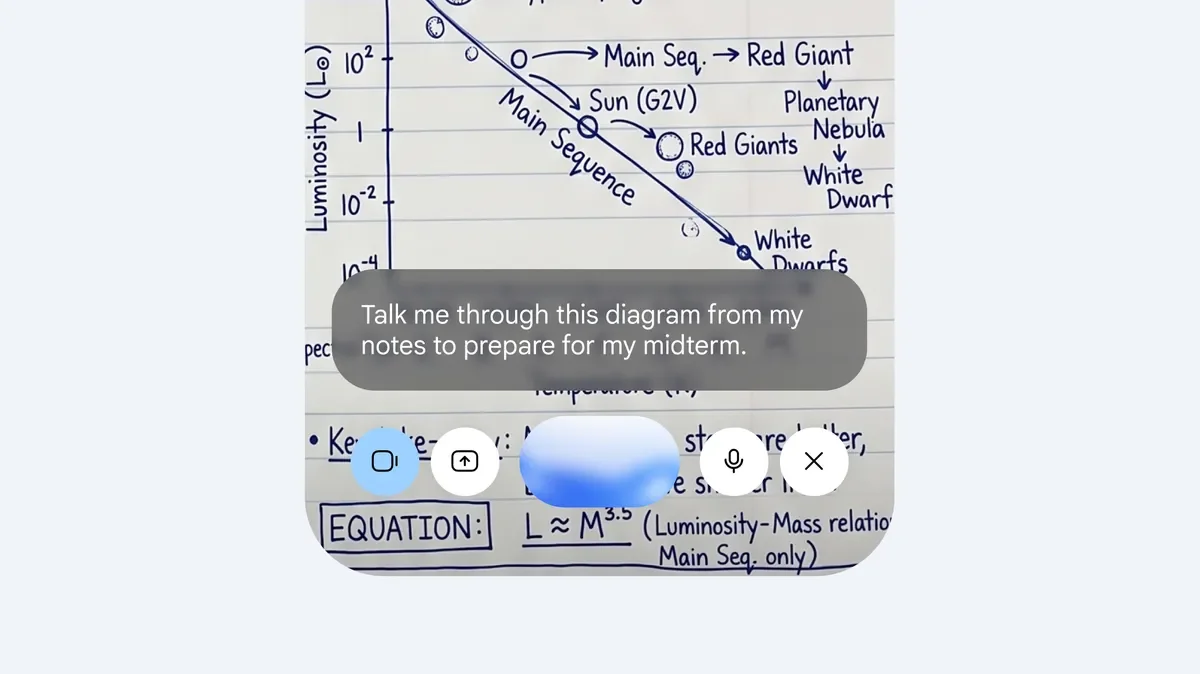
Turning on the camera adds another kind of help: Gemini can respond to what’s in front of you. Debbie C. of The University of Texas at Austin, a designer learning new software, uses it to get step-by-step guidance when she’s stuck. If you’re learning a tool by doing, that could be more useful than searching for a tutorial and trying to match its instructions to your screen.
3. Guided Learning
Guided Learning is built around questions rather than quick answers. Fehmaan K. of George Mason University pastes in his work and asks Gemini to help him find where his reasoning went wrong. It prompts him to think through each step, often leading him to spot the mistake himself.
Fehmaan’s advice is to make a guess, even when you’re uncertain, instead of asking for the answer as soon as you get stuck. The correction, he says, is more likely to stick than a ready-made explanation. That approach depends on students being willing to work through the question; the tool can prompt that effort, but it can’t supply it for them.
4. Study guides
Gemini can turn lecture slides and notes into a study guide tailored to a course. Jamie C. of the University of Southern California uses the feature when instructors haven’t provided an exam overview, asking Gemini to summarize what she needs to review.
Jamie recommends keeping a separate Google Drive folder for each class and sharing the relevant folder with Gemini. That gives the guide both the instructor’s materials and the student’s own interpretations to draw on—a useful reminder that the output depends on what goes in.
5. Quizzes
Custom quizzes offer another way to turn course material into practice. Shuang P. of New York University says they help build confidence before exams, which carry much of the weight in many of her courses.
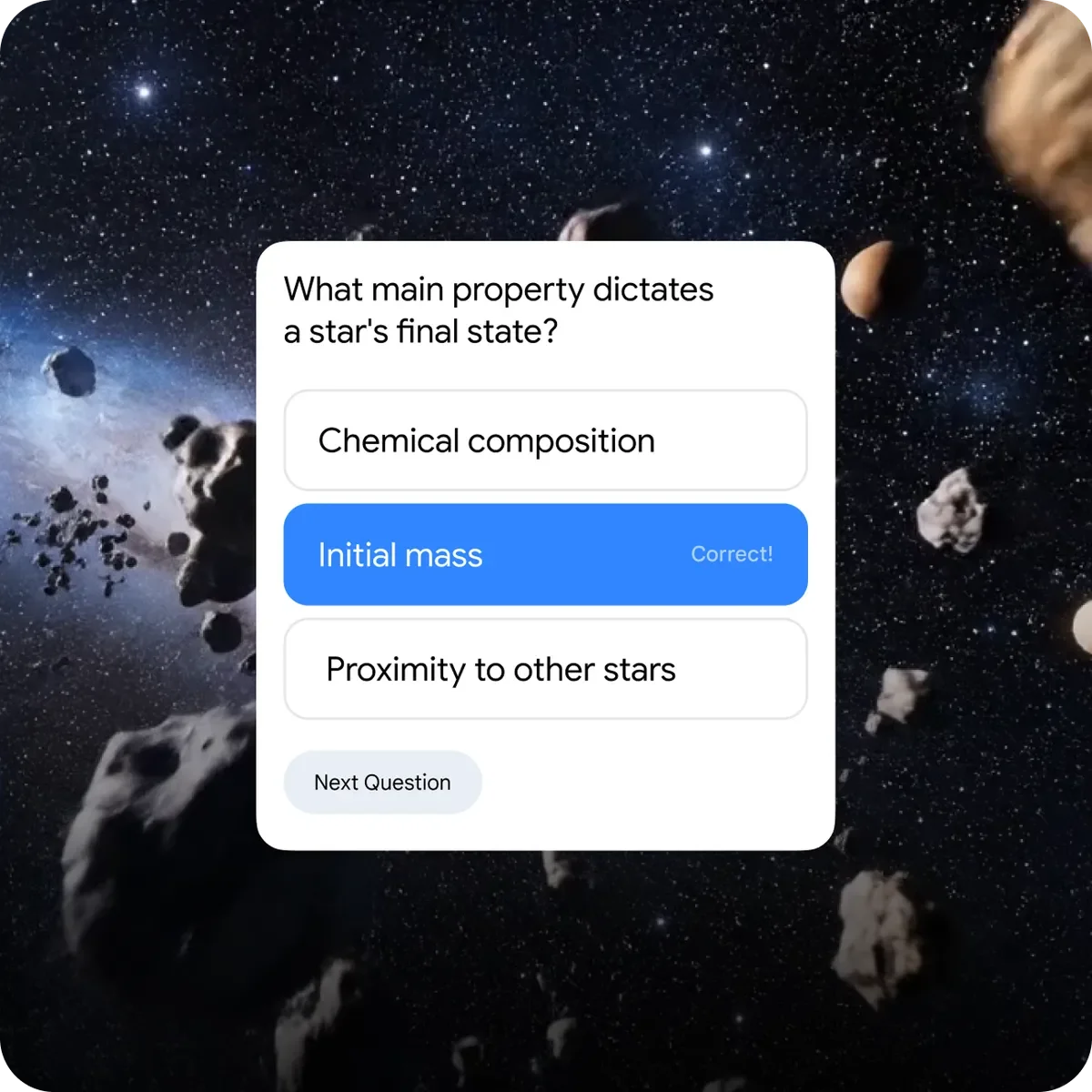
Some students also use Gemini to check their work when a teacher provides practice questions without an answer key. Tobi U. of the University of California, Riverside, says the explanations help reveal which questions she might miss or misunderstand. The value here is in seeing the reasoning, not just comparing answers.
6. Unlimited uploads
Gemini student plans include unlimited uploads of class materials, study notebooks, interactive visualizations and images. Chaeyeon H. of Boston University says adding material gives Gemini more context about her notes. Nicole F. of the University of California, San Diego, uses photos to bring in references ranging from homework and lecture slides to historic artifacts and works of art.
Students also upload drafts alongside assignment rubrics to check whether they’ve addressed each requirement. That can help catch omissions, though a checklist is only as useful as the material and instructions it’s given.
7. Audio Overviews
Audio Overviews turn documents, slides and other materials into podcast-style conversations. Nina R. listens while walking across campus, using the audio as a last-minute review session and taking notes along the way.
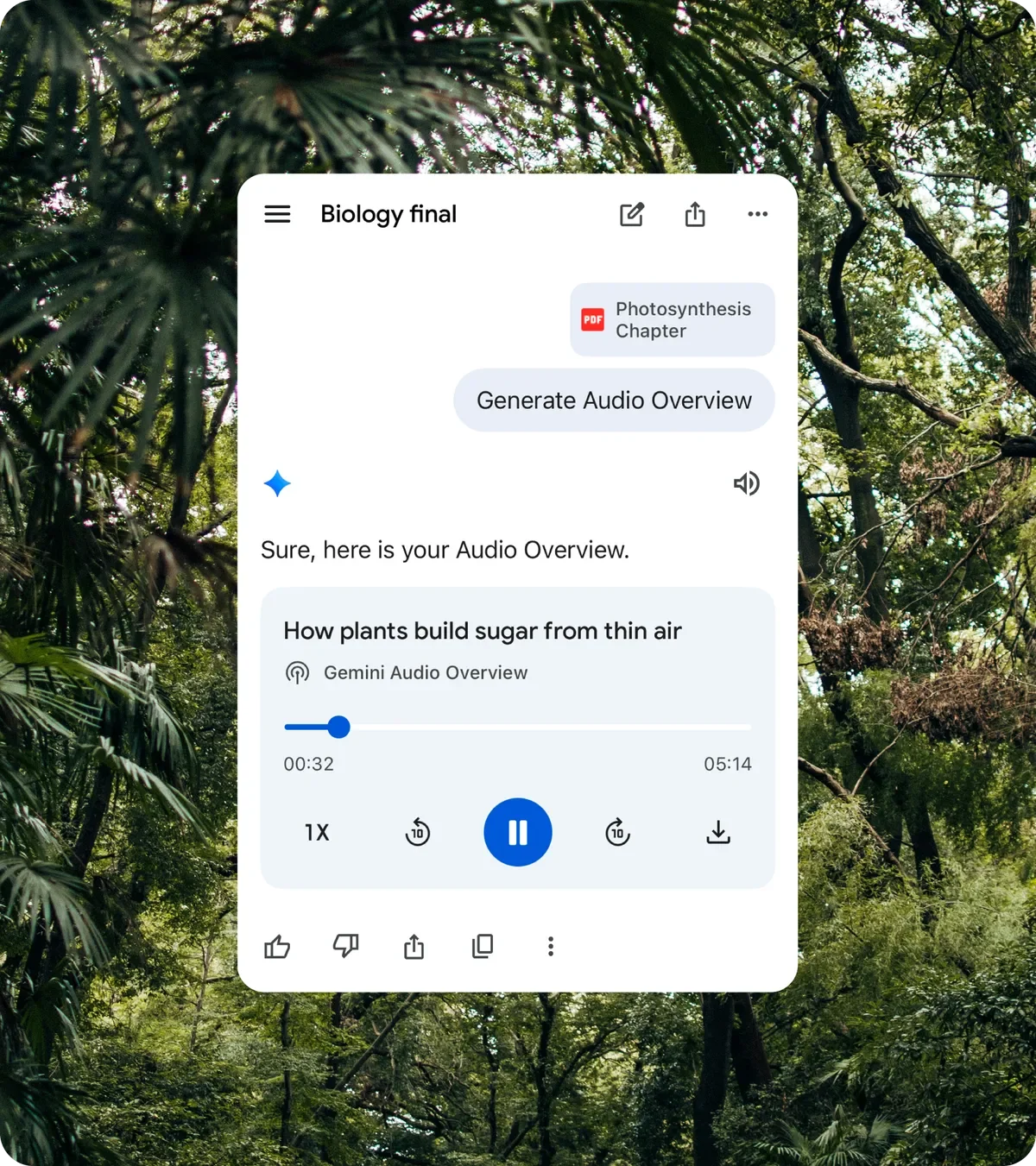
The format can also give competing arguments room to breathe. Parikshit M. of Rutgers University uploads articles with opposing views and says the generated hosts naturally argue both sides. That’s a more active way to revisit a debate than simply listening to a summary.
8. Image generation
Nano Banana, Gemini’s image generator, helps students develop visual ideas and refine designs. Nelson G. of Morehouse College says image generation has helped him format images and sharpen details in creative work.

The use cases extend beyond coursework. Beverlyn turns ideas into flyers for clubs and posts for social media, and says the results can match her style. For students who find graphic design overwhelming, generating a first version may make it easier to get started.
9. Gemini in Chrome
Gemini in Chrome brings help into the browser, so students can ask questions without copying text into another chat. Megan J. of the University of Illinois Urbana-Champaign uses it to review exam answers she got wrong.
It can also explain a passage in a complex document while you stay on the page. Fehmaan recommends asking narrow questions—such as what a specific sentence means—because that’s where the browser integration saves the most time.
10. Deep Research
Deep Research turns browsing into a report
Deep Research can search hundreds of websites, synthesize what it finds and produce a multi-page report in minutes. You can then discuss the findings with Gemini Live while you’re away from your desk. That’s a meaningful time saver for research-heavy work, though the feature’s speed doesn’t by itself tell you how reliable its conclusions are.
Annitha K. of San Diego State University says she uses Gemini to shape a focused research prompt before sending it to Deep Research. The tool then compiles market analyses and literature reviews, she says, freeing her to spend less time gathering material.
Connect classwork to the apps you already use
Gemini can also work across Google apps. After connecting apps such as Drive, Calendar, Gmail and Sheets, students can use it to turn course information into an organized workflow. Skylar has Gemini check syllabi in Drive for assignments and due dates, then put them on the Calendar. Aaryaman B. of Michigan State University asks it to record daily tasks in a master Sheet before bed, so the list is ready the next morning.
For Megan, a teaching assistant, the practical benefit is in Gmail: Gemini helps find student messages that need a reply or follow-up. It’s a small administrative task with real stakes for someone trying to stay responsive. Still, connected apps are most useful when their output is checked; organizing a calendar or inbox only helps if the details are right.


Discussion
Sign in to join the discussion.