Classroom studies in the UK and Italy suggest Gemini can support student learning and active lessons, though standardized test results show limits.
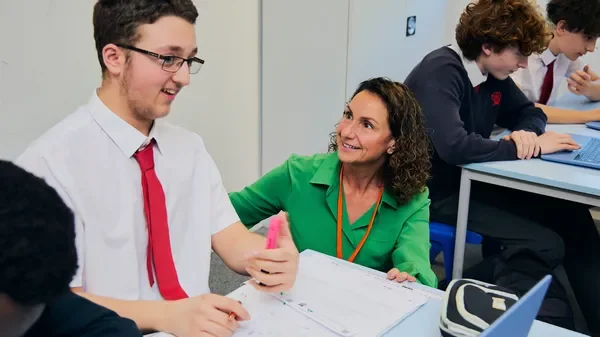
How Gemini is helping students and teachers in the classroom
Claims about AI in education are easy to make; evidence from classrooms is harder to come by. New studies in the UK and Italy examine whether Gemini can support student learning and help teachers run more active lessons. The findings make this more than a product announcement, though the summary here doesn’t provide enough detail to judge how large or lasting the effects are.
The focus is on two potential benefits: helping students learn and giving teachers more room to guide classroom activity. If you work in education, that distinction matters. An AI tool’s value depends not just on what it can generate, but on whether it changes how students engage with a subject and how teachers spend their time.

The studies come from the UK and Italy. The article is by Kevin McKee, Evaluations Lead for AI for Education at Google DeepMind, and Amanda Rosenburg, a Staff Researcher at Google for Education. That context is useful when weighing the claims: the research is presented by people working within Google, so the methods and results deserve a close read.
Published October 29, 2026. Read the article.
UK: AI tutoring matches human support in classwork
The strongest result from the UK trial is also the one that needs the most context: Gemini supported students about as well as human tutors on classroom tasks and quizzes, but the study didn’t show a corresponding gain on a standardized test. This was a 10-week randomized trial involving more than 1,100 students aged 12 to 15, run with Eedi on its school platform. It followed an earlier exploratory study with Eedi, which tested an AI tutor designed to spot a student’s mistake and help them correct it. In the newer trial, students who got a question wrong received either a static hint, one-to-one help from a human tutor, or interactive tutoring that paired Eedi’s teaching resources with Gemini. Teachers monitored progress and supported students in class, while tutors provided individual guidance through the platform. Experts also reviewed every AI response before it reached a student. Researchers tracked performance through regular assignments, interim quizzes, and independent STAR standardized tests. The quality of Gemini’s tutoring improved sharply from the previous year: expert approval rose from 76% to 95%, a gain of nearly 25%. On in-platform assignments and interim quizzes, students receiving AI help performed similarly to those working with human tutors. Gemini also tended to guide rather than give away solutions: it withheld direct answers in nearly 99% of sessions, and students worked through the math themselves in more than 85% of chats. That distinction matters. An AI tutor that keeps students thinking could be more useful than one that simply speeds them through exercises. But the STAR results temper the claim. The trial found no improvement on that standardized test, and researchers think the step-by-step approach may explain why: students solved about 14 problems per session with AI, compared with 19 using static hints. Across ten weeks, they covered less material, which may have left too little time to affect a test spanning a broader curriculum. The explanation is plausible, but the trial doesn’t settle it. Google says it’s exploring yearlong follow-up studies and broader ways to measure learning outcomes. The full [technical report](https://services.google.com/fh/files/misc/learnlm_oct26.pdf) has more detail. As Michelle White of Buttershaw BEC put it, “Students found the tasks easier to engage with and therefore were more motivated. Where previously, they got frustrated with having to wait for help with things that they couldn't 'get,' with the AI tutor, they got the help straight away so they could carry on.”Italy: Gemini shifts lessons toward collaboration
The Italian study points to a different kind of benefit: Gemini appeared to help teachers reshape classroom activity, with reported gains in participation and teacher wellbeing. After an initial pilot in Northern Italy, researchers worked with the Salesians of Don Bosco school network and the Pontifical Salesian University in Rome on a yearlong study across 31 schools. It covered 1,600 teachers in primary, secondary, and vocational education, representing more than 24,500 students aged 13 to 18. Researchers collected classroom activity data and teacher self-reports, comparing lesson planning with and without Gemini for Education. The reported changes suggest that the tool mattered most when teachers used it to plan lessons, rather than handing over the work of teaching. Seventy-nine percent said they felt more creative in their teaching and planning with Gemini, compared with 30% without it. Front-of-class lectures fell by 38%, while student-led collaboration nearly tripled through workshops, group work, and peer discussion. Student-reported engagement rose from 77% to 84% in lessons co-designed with Gemini, alongside more debate over different viewpoints and greater ownership of learning. There’s a practical point here for educators: lesson design can shape how much energy a teacher must spend keeping a class engaged. In the study, teachers’ reported reliance on their own effort to hold students’ attention fell by 66%. Lessons where the activity itself drove engagement increased from 23.2% to 52.2%. Those are self-reported findings, so they don’t establish that Gemini alone caused the changes. Still, they suggest a useful role for AI: helping teachers prepare activities that give students more reason to participate. One middle school teacher described the value as “The feeling of not being alone in educational design is the greatest benefit. Gemini reduces that sense of isolation that we teachers all too often feel.” A sophomore-year natural sciences teacher said Gemini turned a planned lecture into “an interactive problem-solving workshop,” allowing the teacher to step away from the board and guide students as they worked. Teachers also said Gemini helped them adapt materials when preparation time was tight, leaving more room to mentor and connect with students. The Don Bosco CNOS-FAP Foundation’s implementation [report](https://www.cnos-fap.it/notizia/intelligenza-artificiale-e-formazione-professionale-un-volume-orientarsi) provides further details.A classroom lesson students experienced, not just memorized
The clearest takeaway here is the teacher’s account of what changed: a language lesson became something students participated in and shared with one another, rather than material they simply had to memorize. The teacher described the degree of active participation and peer collaboration as unprecedented. That’s a striking endorsement, though one classroom account can’t tell us how consistently Gemini produces the same result.
For teachers considering AI in class, the claim worth examining is whether it helps students learn by doing. This quote suggests it can. The evidence here is personal, not comparative, but the distinction between recalling a lesson and living it is a meaningful one.
Get Google updates
Google invites readers to sign up for email updates about product news, events, special offers, and more. You can unsubscribe at any time. Google says subscriber information is handled under its privacy policy; a confirmation email completes the sign-up.


Discussion
Sign in to join the discussion.