In a randomized study of 300+ University of Tokyo students, Guided Learning users improved test scores 1.5 times as much after a short statistics session.

What the new research can—and can’t—tell us
Evidence that an AI learning tool improves student performance matters more than another feature announcement. Google says two new studies found that Guided Learning boosted learning gains. The opening details don’t identify the studies, explain how the gains were measured or give their size, so the results are promising but hard to judge on their own.
Google is pairing the research with new Classroom features that give teachers more control. That combination is telling: student support is the headline, but whether teachers can shape how the tools are used may determine their value in real classrooms.
The announcement was published Nov. 3, 2026. It’s by Sofie Cornelis, a senior product manager at Google for Education, and Asha Johnson, a product manager at Google DeepMind. If you’re assessing Guided Learning for your school, the studies’ methods and results will matter more than the headline claim.
New research shows how Guided Learning supports students
Guided Learning’s gains showed up in a short study session
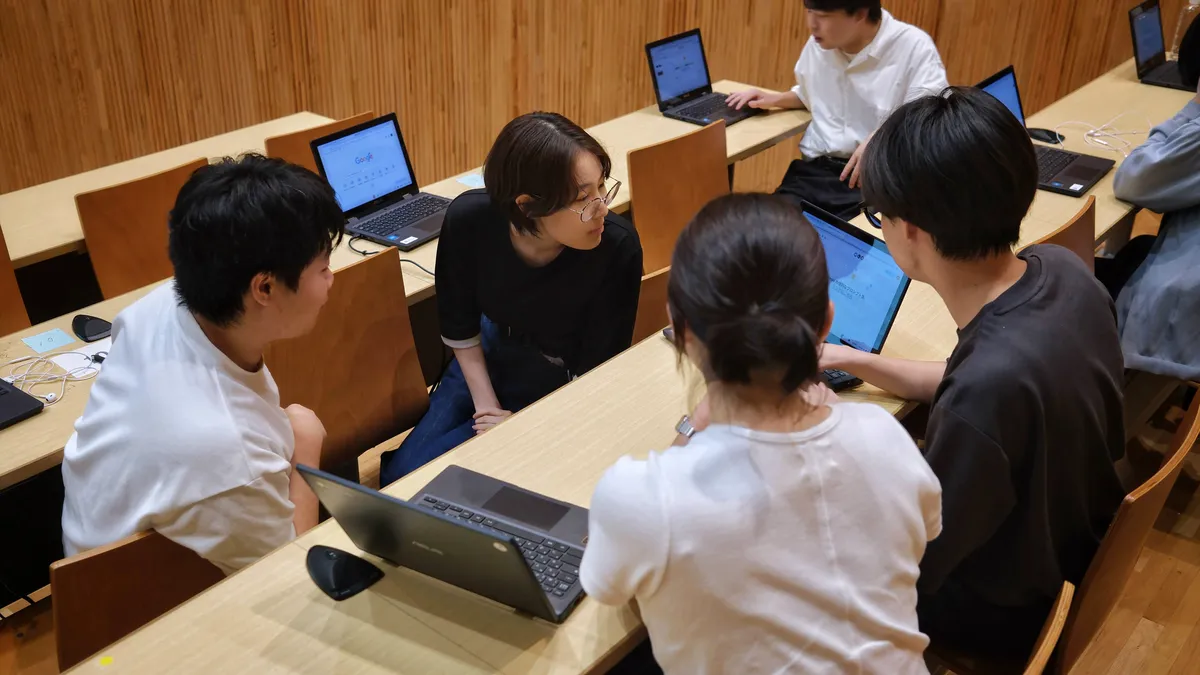
Google’s case for Guided Learning rests on a useful distinction: the tool is meant to coach students through difficult material, not hand them answers. In a randomized controlled trial involving more than 300 University of Tokyo students, researchers compared standard online study resources with the same resources plus Guided Learning in the Gemini app. Students studied statistics independently for half a day. The difference in test scores was measurable. Students using standard tools improved by 5.3 percentage points; those with Guided Learning improved by 8.1 points, or 1.5 times as much. That’s a notable gap for a single session, though the fragment doesn’t provide enough detail to judge how durable the gains are or how broadly they’ll carry over to other subjects and settings. Students used the tool to request practice quizzes, step-by-step explanations and custom visual aids. Their accounts suggest the value came from working through uncertainty: one student said Gemini generated quizzes on difficult points, while another described testing their own explanations against the AI. A third said its question-and-answer format helped clarify statistical terms and charts, including how to make common graphs.
“The most effective way of learning for me was asking Gemini about parts I found difficult to understand and having it generate quiz questions for me on the spot. Because Gemini breaks things down and teaches step-by-step, I rarely got stuck along the way.”
A university student
“I formulated my own intermediate understanding in my own words and threw it back at the AI to gauge its accuracy, which significantly sharpened the resolution of my conceptual understanding.”
A university student
“Gemini promoted a clear understanding through a Q&A (one-question, one-answer) format… I was able to deepen my understanding of terminology and charts by asking Gemini how to easily create the types of graphs typically used in statistics.”
A university student
Classroom use gives teachers more control
The University of Tokyo trial tested independent study. A separate four-week pilot looked at how Guided Learning might work inside Google Classroom, where teachers can assign relevant lesson materials and retain more oversight. Google partnered with Ark to run the pilot in three UK secondary schools across four subjects. Teachers said the tool handled students’ initial questions during independent work, leaving them more time for individual help. Most surveyed students said they felt comfortable asking Gemini for help when stuck, and more than half said it helped them solve problems independently. Those are encouraging responses, though survey feedback doesn’t establish how much students learned. One Year 9 teacher at Ark Schools said students produced more insightful written work after using Guided Learning to question their assumptions. The same teacher observed that students asked the tool questions they weren’t comfortable voicing in class. That quiet channel for uncertainty may be as significant as the time it saves teachers.“They [the students] were able to be more insightful and offer more in terms of their written responses because of having literally questioned their own assumptions further and further through Guided Learning.”
A Year 9 teacher, Ark Schools
Google says it is beginning to roll out Guided Learning in Google Classroom, giving teachers more control over when and how students use it. You can read more about the rollout here.“Students will always say, 'Yeah, I understand it,' even if they don't… Actually, a lot of the students were asking [Guided Learning] things they weren't comfortable saying out loud.”
A Year 9 teacher, Ark Schools


Discussion
Sign in to join the discussion.