Ruth Genn’s work has grown from a school for struggling readers into a statewide effort to prepare teachers to teach reading.
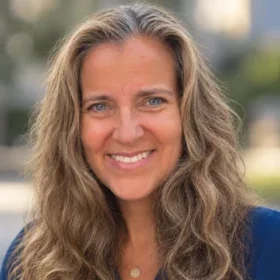
 Ruth Genn’s work in literacy began with a question many education systems still struggle to answer: what happens when students who find reading difficult have never received instruction designed to teach them how to read? Her response has moved from a school in the Bronx to a wider effort to change how New York prepares teachers.
Genn brings 25 years in education to that effort. She began as an elementary school teacher in the Bronx through Teach For America, then worked in policy, data, and systems change for a large school network. Later, she led an organization supporting first-generation college students on their way to and through college. A personal experience shifted how she understood that career: her son was diagnosed with dyslexia, and she came to see that evidence-aligned instruction was the missing piece in his education.
Seeing the same reading gap across students
Her son’s experience gave Genn a new lens on students she had encountered in different roles. She thought of young men of color in New York City’s Alternative Schools District, also known as District 79; over-age and under-credited students she had supported as they worked toward graduation; and a third grader from her own classroom who once crumpled up his paper and ran out.
Those experiences, she concluded, shared a cause. “They were all suffering from not having been taught to read.” The observation points to a problem beyond individual diagnoses: students who struggle can reach later grades without having received instruction that addresses how they learn to read. For Genn, improving support meant changing both what happens in classrooms and how teachers learn to teach.
A public school designed for struggling readers
In 2019, Genn learned about Imagine NYC Schools, a funder-led call for people to propose new schools around a “bold idea.” She joined six women from different backgrounds who shared a personal connection: each had fought for her own child to learn to read. With support from The Windward School, an independent day school serving students with dyslexia, they proposed a public school built for students who struggle most with reading.
The proposal became the South Bronx Literacy Academy, which opened in District 7 in fall 2023. It was the first district public school in the country built specifically for students with dyslexia and other language-based learning disabilities. A second school, Central Brooklyn Literacy Academy, opened in Central Brooklyn in fall 2025.
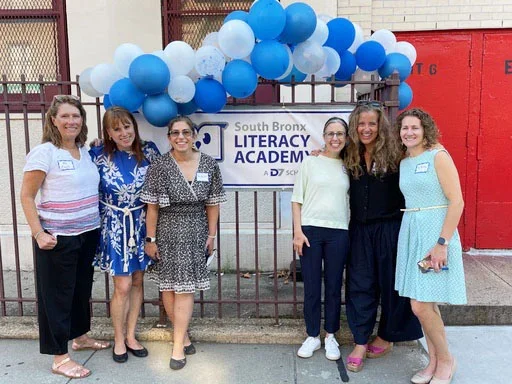
Genn now serves as executive director of Literacy Academy Collective. The organization aims to build a network of public schools that bring culturally relevant, structured literacy to struggling readers at the intersection of race, poverty, and disability. The school model made the need for stronger instruction visible; it also exposed a related weakness upstream, in teacher preparation.
Extending the work into teacher preparation
Opening a school for students with dyslexia and other language-based learning disabilities made clear that teachers and school leaders needed more sustained, in-depth training. Educators who already understood evidence-aligned reading instruction had often learned it outside their formal preparation programs. That gap led Genn to help New York State join The Path Forward, a national policy initiative focused on incorporating the science of reading into teacher preparation and licensure programs.
The work required participation from across the education system. Stakeholders included the New York State Education Department (NYSED), the governor’s office, legislators, education preparation leaders and faculty, K-12 leaders, and unions. In New York, a steering committee organized three working groups drawn from across the state to examine literacy instruction and teacher preparation.
The discussions surfaced agreement that literacy instruction in New York State Educator Preparation Programs (EPPs) was inconsistent and needed to change. As NYSED began addressing policy issues, Genn and her higher education partners focused on working directly with EPPs. They sought funding to pilot changes on campuses, where teacher preparation courses could be revised and faculty could work through what the science of reading means for their programs.
“We thought it would be great to get one large donation…but the white knight never appeared.” Instead, several foundations contributed smaller but significant sums. Together, their support funded 11 EPP Campus Transformation grants totaling close to $6 million.
The Reading League and Deans for Impact provided technical assistance. Their work included helping campuses align teacher preparation courses with the science of reading, as well as building trust with faculty and sustaining it through the changes. Each campus shaped its own approach, according to Genn, while working toward the shared aim of preparing future teachers for their classrooms.
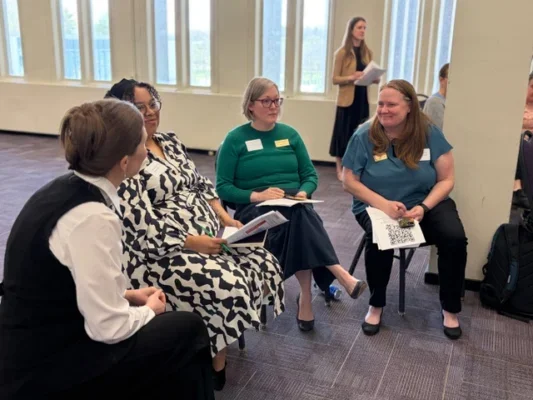
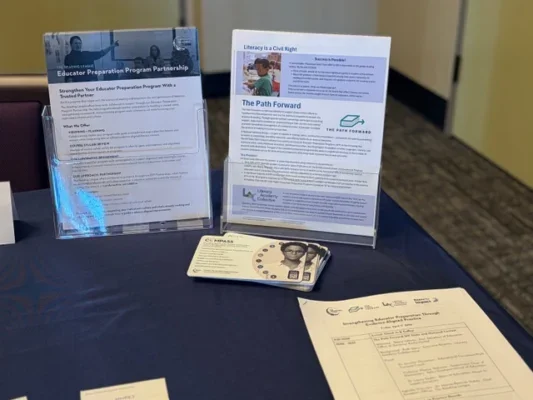
“It has been a true inspiration to see the different ways campuses have used these dollars to transform their programs. Each campus has done something a bit different, but all of them are doing the deep work of making sure that their pre-service teachers are prepared for their classrooms.” The variation matters: campus-level change depends on faculty and programs doing the work within their own settings, while the grants give them a way to begin.
A campus visit brings the work full circle
In April 2026, one of the pilot EPP campuses asked to visit the South Bronx Literacy Academy for a learning walk. Some professors arrived skeptical of structured literacy. During the visit, they met teachers and the principal, saw how the school’s systems worked, and encountered data and students’ emotional changes. By the end, their skepticism had shifted.
For Genn, the visit connected the school’s classroom work with the longer effort to change teacher preparation. The Literacy Academy Collective, The Reading League, and Deans for Impact had backed a process that brought faculty into direct contact with the school’s approach. Seeing the instruction in practice gave the conversation a concrete reference point.
“We know there are so many professors out there who are taking a leap and doing the hard work of learning and sometimes re-learning more about the craft they are so passionate about. It is the honor of a lifetime to be part of this change.”
Why the work continues
Genn describes teaching reading as difficult, particularly when students struggle. The past five years have brought some of the hardest challenges of her 25-year career, she says. Yet the result she has seen when a child learns to read keeps her and her colleagues focused on the work.
“When it changes for them, it feels like the world is a different place, like anything is possible. The fact that we could give that feeling to other students and parents drives us like nothing else.”
She is hopeful about New York’s direction and clear that there is more to do. Her conviction is direct: “I believe that all kids can learn to read and write, and through hard work and partnerships, we are making it happen.”
Genn’s path—from teaching in the Bronx, to supporting students through different stages of education, to helping open literacy-focused public schools and strengthen teacher preparation—shows how a classroom problem can reveal a system-wide one. The next measure of progress will be whether future teachers enter classrooms better prepared to teach reading, and whether students who have struggled receive the instruction they need.
Your stories help bring The Reading League’s mission to life. If you’d like to share how its work has supported your students or community, .
The post It Takes a League: Ruth Genn’s Fight to Transform How New York Teaches Reading appeared first on The Reading League.
===

Discussion
Sign in to join the discussion.