Online and hybrid courses have become a lasting student choice, while CU Denver instructors adapt classrooms to serve remote and in-person learners.
For many CU Denver students, online classes have become part of how they make college fit around work, family and campus life. The shift has implications for universities too: flexible courses can help recruit students as traditional enrollment faces pressure, while asking instructors to build lessons that work for people in the room and on screen.
That balance is visible in Kristin Whitmore’s Mathematics for Elementary Teachers class. The University of Colorado Denver instructor began a recent session by asking students whether they had ever performed on a stage. Remote students answered in Zoom’s chat with stories about playing in bands; an in-person student described appearing in a school play. Whitmore used their responses to make a point about teaching: it involves performing for an audience.
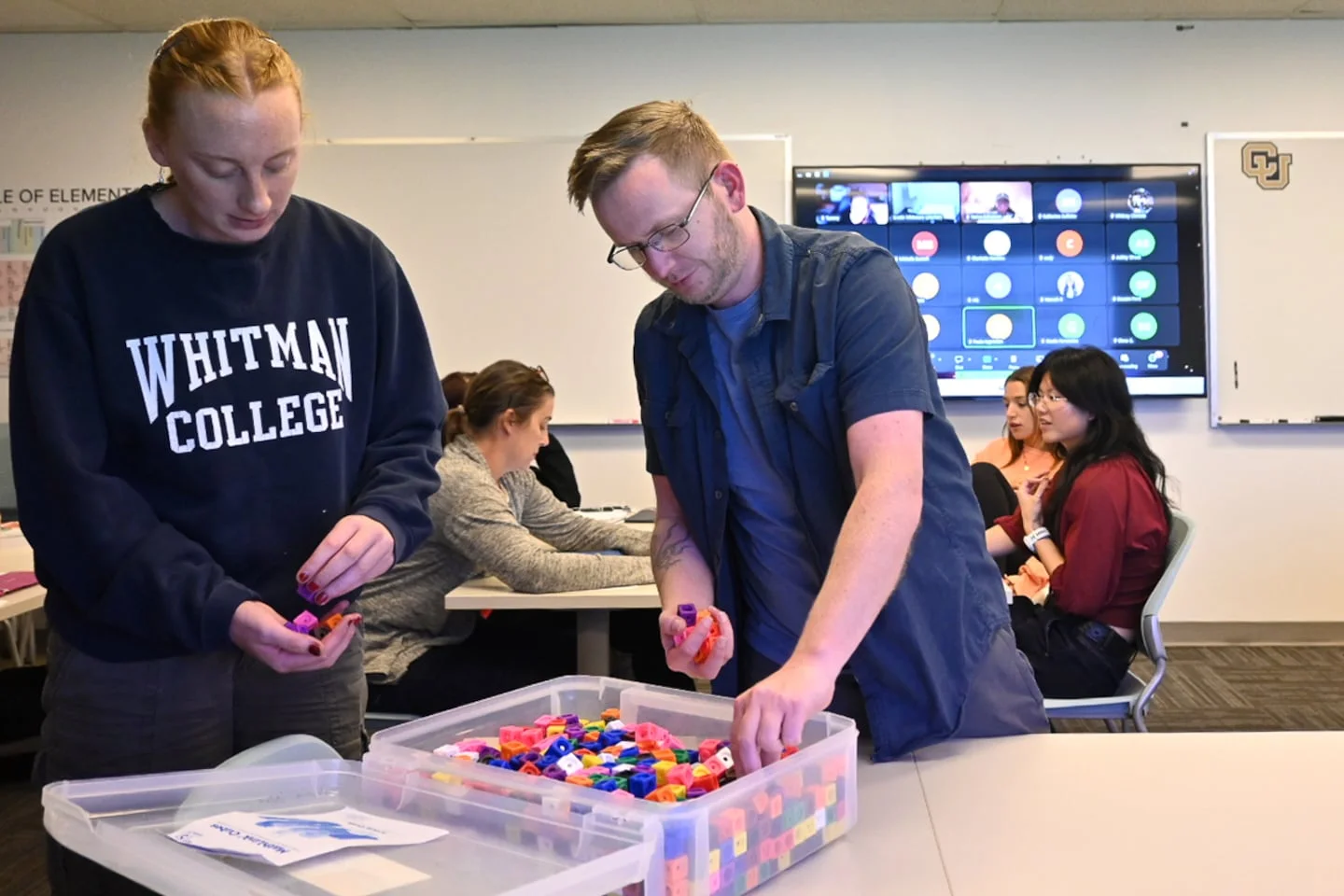
Whitmore’s class follows a HyFlex format, giving students the choice to attend in person or online. She prepares for both audiences, checking the lights, cameras and microphone before class. For a lesson on division, she also set out colored blocks as teaching props.
That preparation reflects the additional work involved in a classroom that serves two groups at once. Whitmore calls them “roomers” and “zoomers,” and shifts her attention between them as she teaches. She greets online students by name as they sign in, just as she would welcome students arriving in person.
“Hi Victoria. Hi Elena. Hi Alyssa,” she says as students appear in Zoom.
Flexibility fits around students’ lives
Students at CU Denver describe different reasons for choosing online courses. Some want to avoid downtown traffic; others need room for campus activities, paid work or family responsibilities. The common thread is control over when and where they can keep up with coursework.
English major Levi Roberts, 21, worked at least 32 hours a week during her first two years at CU Denver. That schedule left little time for driving to campus or attending even one class in person. She works fewer hours now as a junior, but continues to favor online options.
“I ended up just really liking the model,” Roberts said.
Adrian Saavedra, 19, has chosen mostly online courses to make space for his fraternity commitments. He says the format gives him more responsibility for managing his studies and seeking support when he needs it.
“It gives me the opportunity to take responsibility into my own hands,” he said. “And if I am struggling, if I need help, I’ll ask.”
For students with caregiving responsibilities, attending remotely can be the difference between making it to class and missing it. Korinne Ruhnke, 33, said she sometimes can’t find childcare for her son. On those days, she can join Whitmore’s class from home. If work delays her trip to campus, she can also tune in online while driving there.
“Then I didn’t have to catch up once I was in the actual classroom,” Ruhnke said.
Graduate student Sarah Lauzon said she came to understand the value of online attendance after she was late to class herself. Now she uses the option when work or family demands make it the best fit. Instructors such as Whitmore, Lauzon said, make students feel they can choose what works for them. When Lauzon told Whitmore she expected to attend online for the next few weeks, Whitmore said she would miss seeing her in class.
Online enrollment has held on after the pandemic
The growth in online learning began before COVID-19, surged during the pandemic and continued after campuses reopened. Just over one-third of college students took at least one online class in the years before 2020. By 2024, more than half did. Colorado’s figures have followed a similar pattern.
“The spike came from a crisis, but the plateau has come from a choice,” said Bruce Etter, research director at online education association UPCEA.
In a 2026 survey of dozens of colleges, UPCEA found that 80% had made online learning part of their institutional strategy. Etter linked the shift in part to enrollment projections showing fewer high school graduates in the years ahead. Colleges are looking to online programs to reach students beyond the traditional campus population, he said.
“Institutions are leaning on online to make up for what has been the historical bread and butter of so many institutions — that on-campus individual,” Etter said.
Participation varies across Colorado campuses. At CU Denver, 43% of undergraduates took at least one online class in 2024. Colorado State University Fort Collins reported 35% in 2025, while 38% of students across the state’s 13 community colleges took online or hybrid courses.
Fully online programs and courses have also grown. Colorado State University Global enrolled 15% more new students in the first three months of this year than in the same period a year earlier. CU Boulder’s online Coursera courses, first offered in 2020, now have more than 1,000 participants, compared with 42 in their first year.
The pattern extends beyond higher education. Remote and hybrid work have become familiar arrangements for many employees, and participation in virtual K-12 schools doubled between the pandemic and 2024. For colleges, student demand is part of a broader expectation that education should accommodate lives that don’t revolve around a campus timetable.
Teaching across two formats takes planning
CU Denver Provost and Executive Vice Chancellor for Academic Affairs Karen Marrongelle said online courses help the university respond to students’ needs and compete for prospective students. The pandemic showed university leaders that online options could support students who were balancing school with other commitments.
“It’s just been great to be able to support students in that flexibility so that they can continue to live their whole lives while they’re pursuing their education,” Marrongelle said.
Whitmore’s approach makes that flexibility tangible, but it requires more from the instructor. She has to make sure students joining from home can see demonstrations, hear instructions and take part in discussions, while also staying connected to those seated in the classroom. A set of colored blocks or a sheet of paper may need to be positioned for the camera as carefully as it is for the students nearby.
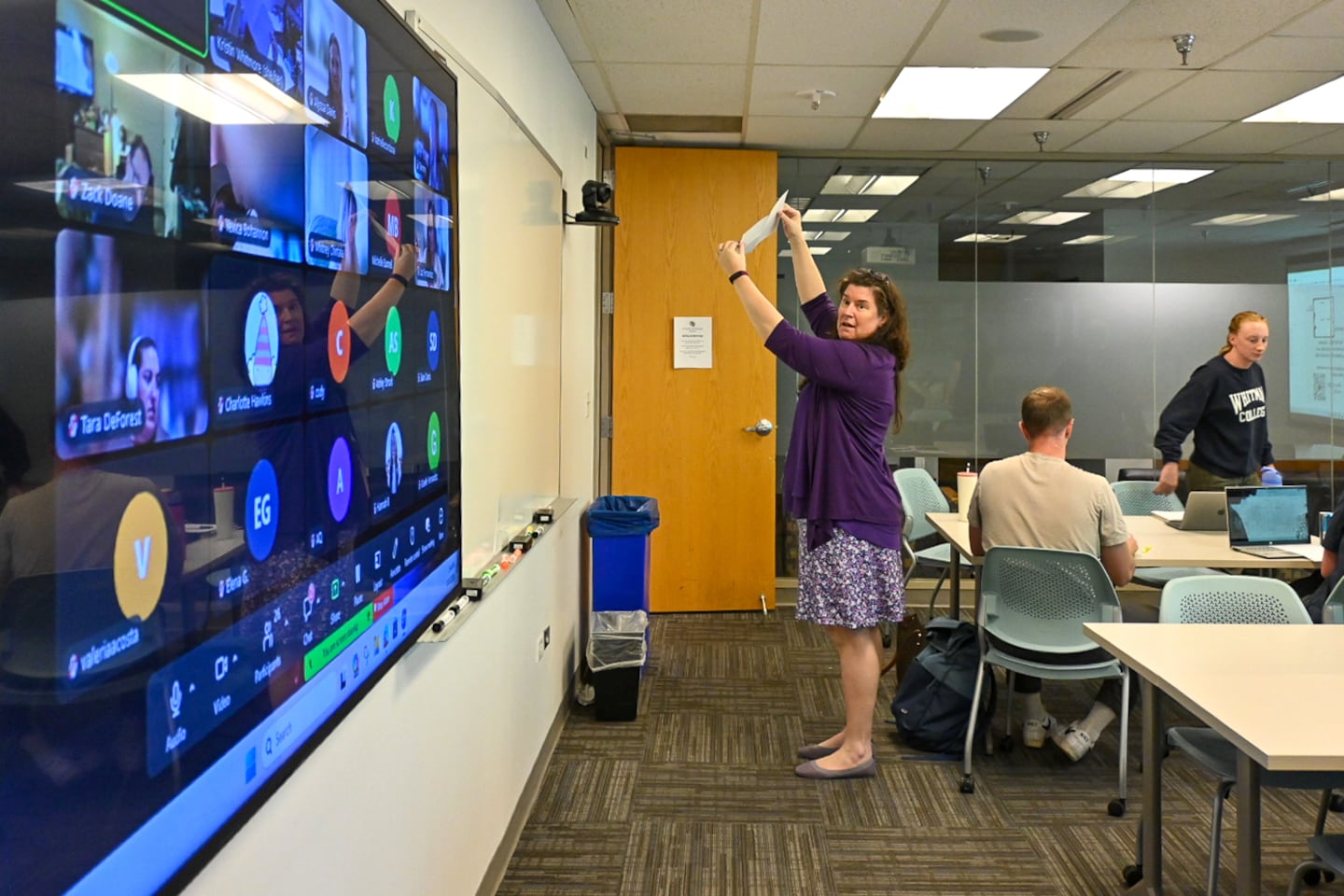
Whitmore has heard many reasons students can’t arrive on time or attend in person: a dog has made a mess, someone is on bed rest, or a student has cut a hand. Her response is to keep the class accessible when possible, rather than treating absence from the room as absence from learning.
The lasting appeal of online and hybrid courses points to a practical challenge for colleges. Students value the ability to adapt class attendance to their circumstances, and institutions see online learning as a way to serve a wider pool of students. The next measure of success will be whether schools can keep that flexibility while giving remote and in-person students a meaningful place in the same class.
Jason Gonzales is a reporter covering higher education and the Colorado legislature. Chalkbeat Colorado partners with Open Campus on higher education coverage. Contact Jason at [email protected].


Discussion
Sign in to join the discussion.