Kamar Samuels cited community resistance and local working groups but offered no timeline for a citywide integration plan.
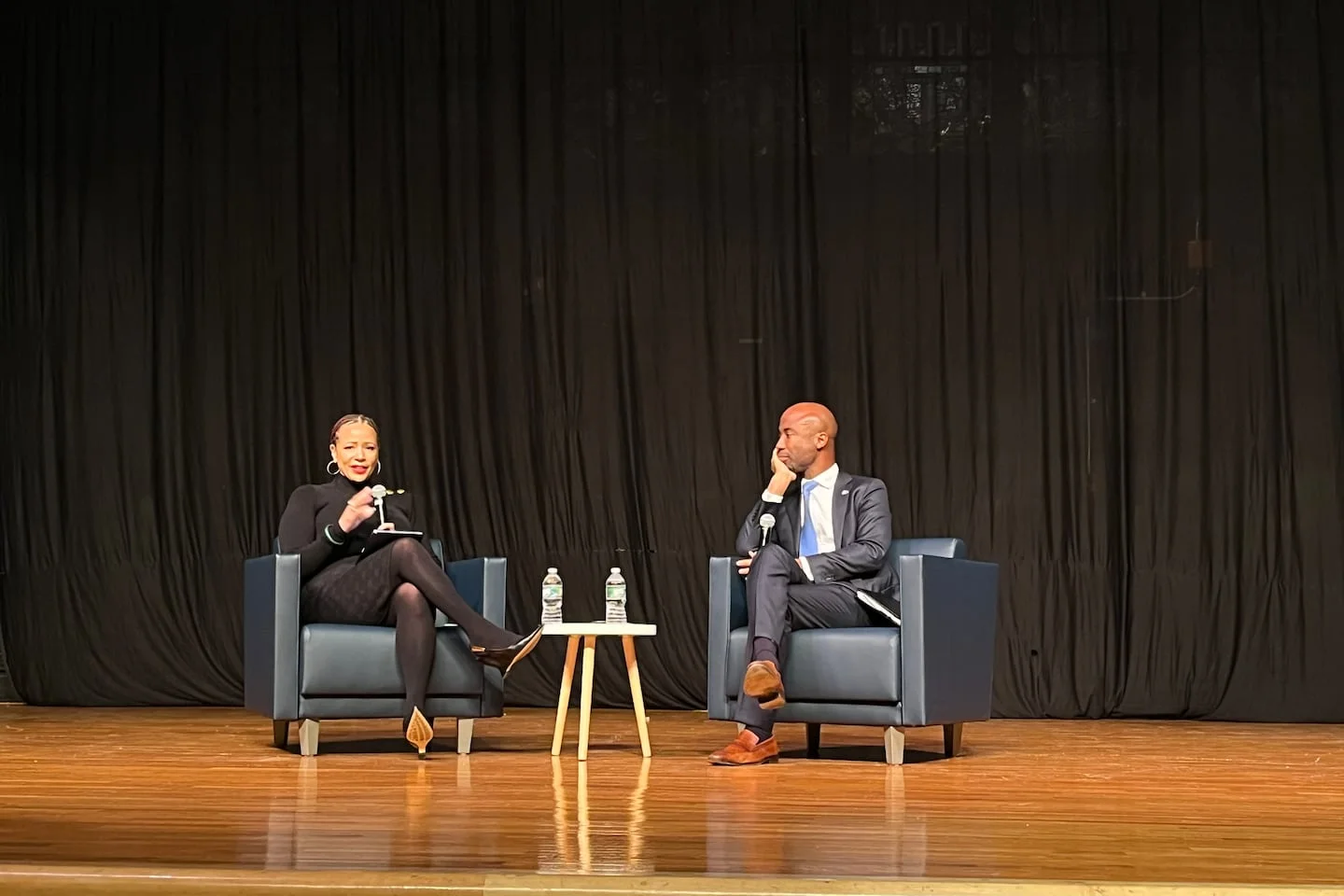
New York City Schools Chancellor Kamar Samuels left a packed town hall without a timeline or specific policies for integrating the city’s public schools. The exchange sharpened a central question for Mayor Zohran Mamdani’s administration: whether its stated priority to address segregation is becoming a plan, or remains a matter for local discussions.
New York Times journalist Nikole Hannah-Jones questioned Samuels for more than 30 minutes Tuesday at the Washington Irving campus in Manhattan. The event, hosted by integration advocacy group New York Appleseed and student journalism incubator The Bell, drew several hundred people. Hannah-Jones had recently published a widely debated essay about choosing a segregated school for her daughter, which she said failed to educate her adequately.
“While they said it’s a conversation, it’s really about to be an interrogation,” Hannah-Jones said. Her repeated requests for a systemwide approach drew jeers when Samuels declined to commit to measures or say when a detailed proposal might appear.
Community support is shaping the administration’s approach
Samuels argued that integration efforts need backing from the communities they would affect, warning that poorly handled discussions could trigger opposition and shut down the debate. “If you don’t have the conversation well, you will see a level of pushback that will essentially start to end the conversation,” he said. Previous chancellors have made similar arguments.
That emphasis on community buy-in sits uneasily beside Mamdani’s recent description of a desegregation plan as “one of our urgent priorities.” Samuels said the Education Department has set up working groups in five of the city’s 32 local districts to consider issues that include integration. Officials haven’t identified the groups’ members or said whether they’ll issue formal recommendations.
“I am not saying that we will not address segregation in our schools,” Samuels said. “We are disagreeing in some ways on how that will be addressed.” Hannah-Jones countered that the lack of a timeline made the process look like a delay. “Ten months in, when a timeline can’t be offered, you can understand why people feel like that means you are just delaying,” she said.
Selective admissions remain a point of dispute
Hannah-Jones also pressed Samuels on screening, the use of students’ academic records to determine admission at some schools. New York City has more schools using this approach than is typical, and integration advocates have argued that screening reinforces segregation. Hannah-Jones asked whether Samuels would reduce the practice, as proposed by a School Diversity Advisory Group convened under former Mayor Bill de Blasio.
Samuels said fewer middle schools screen applicants than before the pandemic, a change he supported while serving as a local superintendent. But he questioned whether ending selective admissions across the board would substantially change where students enroll. “It’s not as though you’re going to remove screens and it’s going to suddenly have everybody going everywhere and it’s going to be great,” he said.
Small schools and disability access are early priorities
Rather than outline a citywide integration strategy, Samuels pointed to small schools with declining enrollment, which he said disproportionately serve Black and Latino students and others facing significant barriers. He wants to examine “how we can make structural shifts to those schools.” About 30,000 students attend what he called highly segregated schools with fewer than 200 students.
Those schools often have fewer advanced classes, extracurricular activities and other opportunities, Samuels said. They also frequently serve students in temporary housing, students living in poverty, English learners and students with disabilities. A Chalkbeat analysis found that 33 high schools now enroll fewer than 150 students and 113 have fewer than 250—eight times as many as 25 years ago.
Samuels also called for broader efforts to integrate students with disabilities. He pointed to the recent expansion of in-demand programs for students with autism and other disabilities into prekindergarten classrooms.
Critics wanted a clearer direction
Some attendees left frustrated that Samuels had not offered a more defined vision for city schools, one neither he nor Mamdani has yet articulated. Johanna Bjorken, whose child is a senior at Urban Assembly Maker Academy, said students understand how they are being shortchanged but see no plan to address it. One observer wrote on X: “Nikole Hannah-Jones absolutely kicking Kamar Samuels’ ass right now.”
The event made the gap between public urgency and administrative detail hard to miss. Samuels’ next test will be whether the district’s working groups produce clear proposals and a timetable that can answer the questions he left open.
Chalkbeat New York reporter Michael Elsen-Rooney contributed.
Alex Zimmerman is a senior reporter for Chalkbeat New York, covering NYC public schools. Contact Alex at [email protected].
Amy Zimmer is the bureau chief for Chalkbeat New York. Contact Amy at [email protected].


Discussion
Sign in to join the discussion.