King's engagement with Hegelian thought shaped his nonviolent activism and provided philosophical tools for his civil rights strategies.
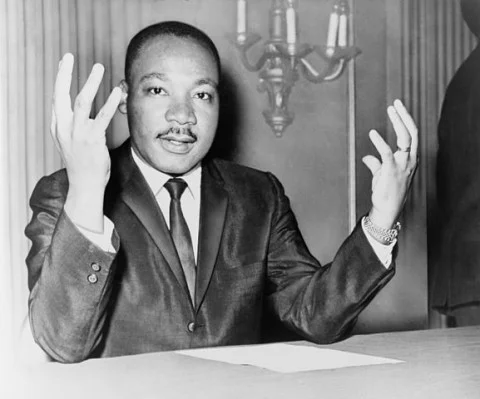
Martin Luther King Jr. stands as an emblematic figure in the Civil Rights Movement, often overshadowed by the complexities of his philosophical influences. While King’s commitment to nonviolence and equality is well-documented, his deep engagement with philosophical thought, particularly that of G.W.F. Hegel, has received less attention. King's ability to intertwine these philosophical frameworks with his activism warrants a closer examination, highlighting how theory intertwined with practice to effect meaningful social change.
The Philosophical Influences on King
Throughout his education, King was profoundly influenced by a range of philosophical ideas, grappling not only with the legacy of Hegel but also with thinkers such as Immanuel Kant, Friedrich Nietzsche, and Søren Kierkegaard. His academic journey at institutions like Boston University and Harvard saw him immersed in the study of philosophy, where he delved into Hegelian dialectics, arguably more so than into Gandhi's principles. As scholar Nolen Gertz notes, King "fought White America… by turning the ideas of dead white men against the oppressive practices of living white men."
Hegel's Dialectical Method
King’s exploration of Hegelian thought provided him with a framework that supported his philosophy of nonviolent resistance. In “Stride Toward Freedom,” he articulated a synthesis from Hegel’s dialectical method, describing nonviolence as a reconciliation of opposing forces—reconciling acquiescence and violence. This lens offered King a way to analyze the social structures of oppression and inform strategies that could challenge those structures without perpetuating cycles of violence.
For King, Hegel's notion that "truth is the whole" helped underline his belief that growth occurs through struggle. This perspective didn't merely serve as an abstract philosophical view; it became a foundational aspect of his activism, allowing him to navigate the complexities of social justice. King wrote, “the principle of nonviolent resistance seeks to reconcile the truths of two opposites…” which clearly points to his understanding of Hegel’s impact on his ideological framework.
Critical Engagement with Philosophy
While King was receptive to Hegel’s influences, he also critiqued various aspects of his philosophy. In his autobiographical reflections and academic studies, King expressed disagreement with Hegel’s absolute idealism, pinpointing what he viewed as its limitations. He acknowledged that the thrust of Hegelian philosophy, particularly regarding historical and social dynamics, had merit that resonated with his experiences and observations of systemic oppression.
His intellectual journey also included encounters with existentialism, leading him to a new appreciation for critical analysis—a cognitive awakening he describes as the revival from his “dogmatic slumber.” This transition illustrated his willingness to embrace a broader philosophical dialogue, encompassing a diverse array of ideas to strengthen his own beliefs and strategies.
The Impact on Civil Rights
King’s integration of philosophical insights into his activism created a rich intellectual foundation for the Civil Rights Movement. Hegel's influence is perhaps most evident when King articulated the complexities of justice in his speeches and writings. By referencing the dialectical struggles articulated by Hegel and his recognition of the societal strife of opposites, King crafted a narrative that transcended simplistic notions of justice, emphasizing the need for growth through conflict.
Moreover, King was not alone in being influenced by Hegel; W.E.B. Du Bois and other intellectuals had similarly engaged with Hegelian philosophy to analyze racial dynamics and consciousness. This shared intellectual lineage underscores a broader philosophical tradition among African American leaders who grappled with the implications of Hegel’s work in their struggles against oppression.
The Historical Context
Interestingly, it’s also essential to recognize that while King and Du Bois drew from Hegel, the German philosopher himself may have been shaped by the very historical narratives of resistance against oppression that African Americans engaged in. Scholars have posited that the Haitian Revolution impacted Hegel’s thoughts on power and human struggle, suggesting a complex interplay between revolutionary movements and philosophical development that informed both Hegel’s ideas and King’s activism.
This reciprocal relationship between philosophy and social movements highlights vital intersections where ideas are not just static theories but living frameworks that can spark change. King’s philosophical inquiry, therefore, is not a mere academic exercise but a vital part of his leadership in the Civil Rights Movement, providing a template for future activists seeking to navigate the moral complexities of their struggles.
The legacy of King reminds us that philosophical engagement can fuel social movements in profound ways, urging contemporary activists to consider the intellectual foundations upon which their strategies stand. As we dissect the layers of his thought, King emerges not solely as a leader of civil rights but as a radical thinker who utilized philosophy as a tool for action. His synthesis of Hegelian thought and nonviolent resistance illustrates the enduring power of ideas to influence and mobilize movements for justice.
Discussion
Sign in to join the discussion.