Gemini’s new visual guides let users explore topics from Silk Road trade to lightning physics, with audio narration and more languages planned.
A visual route through complex subjects
Gemini is adding a visual, interactive way to move through complex subjects, from the scale of atoms to the far reaches of space. Its new immersive explorations library is available through the Gemini student hub: choose “Try immersive explorations” to get started. Direct access from a Gemini chat is planned soon.
The feature takes a familiar educational problem and gives it a spatial form: some topics are hard to understand when they’re presented only as a string of definitions. A description of a jet engine, a trade route or a lightning strike can name the parts and processes, yet still leave readers unsure how those pieces fit together. A guided visual scene can make those relationships easier to inspect by letting users move through a subject in stages.
That approach is useful because scale itself can be a barrier. A broad view may show where something happens or how its parts are arranged; a closer view can explain what those parts are made of or what happens inside them. Moving between the two gives learners a way to connect an overview with underlying mechanisms. The interface can support that connection, though it can't guarantee that the explanation is accurate, complete or suited to every learner.
Following a subject layer by layer
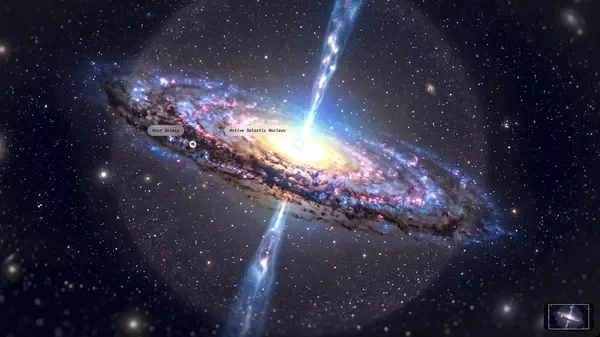
Each guided scene invites users to follow a subject layer by layer. Examples include Silk Road trade routes, the inside of a jet engine and the physics of lightning. Tapping labels reveals more detail, connecting large-scale views with the molecules and atoms beneath them. Audio narration is also planned to guide users through each layer.
The examples span history, engineering and natural science, which suggests the library is intended to be a format for different kinds of explanation rather than a single subject tool. A route can be understood through geography and movement; an engine through its internal components; lightning through physical processes that aren't directly visible. The visual treatment may help users build an initial mental model before they encounter more technical terminology.
Labels matter here. They turn a scene from an illustration into something users can query, allowing a closer look at selected parts rather than forcing everyone through one fixed explanation. That kind of interaction can encourage exploration, but it also puts weight on what the labels choose to explain and how clearly they distinguish a simplified representation from the underlying subject. A polished scene can feel authoritative even when it leaves out important detail.
Here's the thing: “interactive” describes how a person moves through the material, not how much they learn from it. The quality of the teaching still depends on the sequence, the accuracy of each explanation and whether the user can tell how one layer relates to the next. This is more significant than it looks when the format works well, because it can make abstract relationships easier to examine. But the interface alone isn't evidence that a topic has been taught deeply.
Where the format can help
Visual explanations are especially relevant when a topic involves nested structures, changing processes or relationships across distance. A scene that moves from a broad view to a close one can give users a sense of scale before asking them to absorb details. That doesn't replace reading, diagrams or hands-on instruction; it gives learners another way to approach material that might otherwise remain abstract.
(And this is the part most people overlook.) The guided structure is doing as much work as the visuals. By choosing what appears first and what users can inspect next, the experience shapes the order in which a subject is understood. That can make a complicated idea more approachable, but it can also leave out competing explanations or difficult exceptions if the scene is designed too narrowly. The source doesn't describe how the library handles those limits, so the actual depth will have to be judged topic by topic.
Audio narration, which is planned, could add another route through the material. Spoken guidance may help users who prefer listening or who benefit from having the sequence explained aloud. It also raises a practical design question: will narration follow the user's choices, or present a fixed path? The announcement doesn't say. For now, audio is described as planned, so users shouldn't assume it's already part of the experience.
If you're working in this space as a teacher, student or designer of learning materials, the useful question is whether these scenes help people explain what they've seen afterward. Navigation can hold attention, but understanding shows up when someone can describe the relationship between a system's parts or apply an idea beyond the scene. A visual tour is a starting point. Its educational value depends on what users can take away from it.
Access, language and what comes next
The feature is available in English, Indonesian, Hindi, Brazilian Portuguese, French and simplified Chinese. Users with other language settings currently get an English-only experience, with more languages on the way. Explore the library.
Language availability affects more than the words on screen. Labels, narration and the framing of an explanation all need to make sense to the people using them. The announcement names six supported languages and says more are on the way, but it doesn't give a timetable or explain which parts of the experience are localized. For users whose settings produce the English-only version, that limitation could make a visual feature less accessible even if its scenes are easy to navigate.
Direct access from a Gemini chat is also planned soon. If that arrives, it could make the library easier to reach in the course of asking a question, instead of requiring users to start from the student hub. The source doesn't specify how that connection will work, so its effect on the experience remains unclear.
For now, immersive explorations is best understood as a new presentation format with a clear promise and open questions. It gives users a way to move from broad views toward smaller details, and its examples range across several kinds of subject matter. Whether that makes Gemini a better learning tool will depend on the quality of the scenes, the explanations attached to them and how well the experience serves people using different languages. A striking view can open the door. The teaching has to carry the rest.


Discussion
Sign in to join the discussion.