X-Ray imaging and AI technology are unlocking ancient philosophical texts, revealing a Stoic treatise from a scroll buried by Mount Vesuvius.
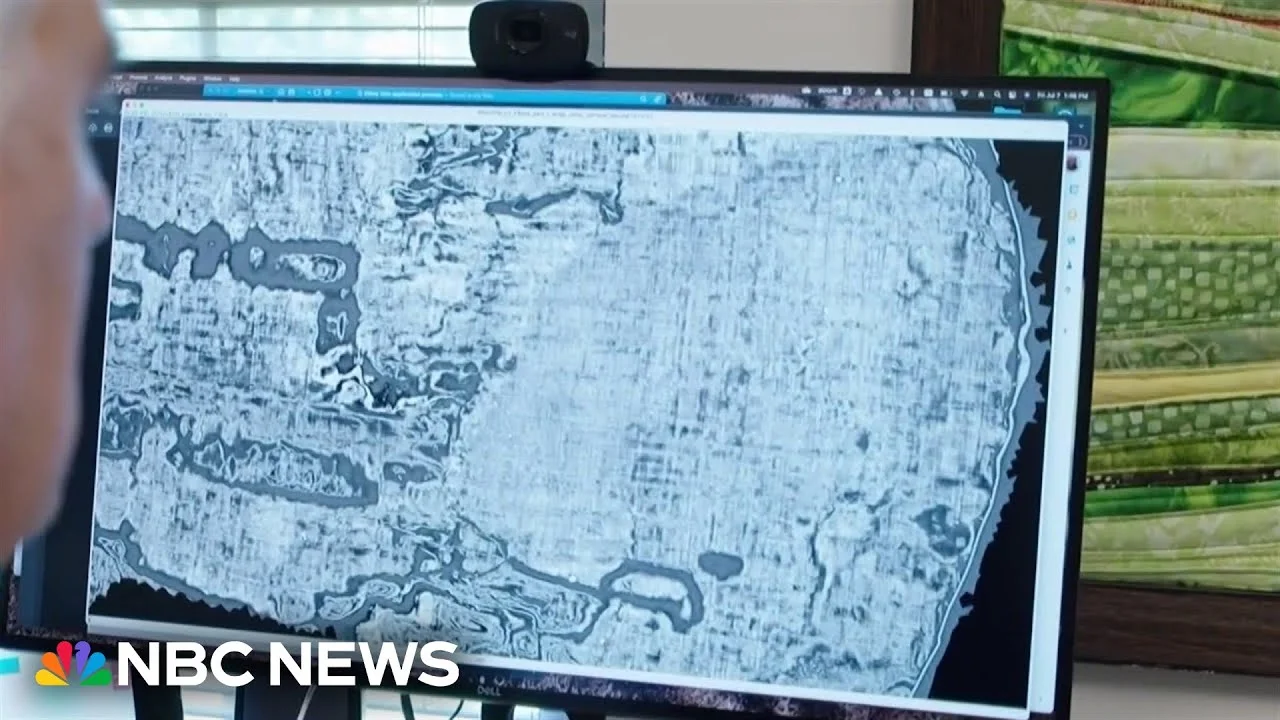
Most discussions around Stoicism prominently feature the works of Epictetus, Marcus Aurelius, and Seneca the Younger; however, there's more to this ancient philosophy than just these familiar names. Recently, significant strides have been made in understanding the teachings of Chrysippus of Soli, often referred to as the Second Founder of Stoicism. His works, believed to be pivotal in shaping Stoicism's presence in the Greek and Roman traditions, were largely lost—buried and preserved in a villa in Herculaneum that was consumed by Mount Vesuvius in 79 AD. While many of the “Herculaneum papyri” remain unreadable, advances in imaging technology hint at a brighter future for these ancient texts.
Unveiling the Secrets of the Past
In a remarkable achievement reported in 2023, researchers participating in the Vesuvius Challenge succeeded in digitally unwrapping and reading a scroll labeled PHerc. 1667, also known as Scroll 4. This initiative invited scholars and technologists to explore the virtually untouched documents with the allure of academic prizes. Unlike previous attempts at physical unrolling that often resulted in further damage, modern techniques like X-ray microtomography and artificial intelligence have made it possible to read these delicate pieces without ever physically interacting with them.
This victory isn't just about the scroll itself; it's a pivotal moment in the field of classical studies. The ability to decode these texts without causing damage opens new avenues for research. Scholars have long pondered over the lost works of philosophers like Chrysippus, and now, technology is finally giving them a chance to resurrect lost insights. The implications are profound. With more sophisticated imaging techniques in the pipeline, who knows how many other texts await their turn to shed light on ancient wisdom?
The Insights of PHerc. 1667
This once-opaque scroll, which appeared merely as a lump of charcoal due to its several attempts at unrolling in less technologically advanced times, has now revealed itself to be a philosophical treatise focused on ethics. Early analysis suggests it addresses themes central to Stoicism, including human nature, impulses, and moral development. Notably, the final preserved column mentions Aristocreon, a direct disciple of Chrysippus, which could date the text back to the second century BC. This connection to a key figure in Stoicism emphasizes the importance of PHerc. 1667 in understanding both Chrysippus’s philosophy and the evolution of Stoic thought.
The juxtaposition of these ancient ideas with modern technology is striking. As you consider the implications, think about what Chrysippus might say about the challenges we face today—issues of ethics in tech, morality in governance, and personal responsibility in an increasingly digitized world. This scroll isn't just another artifact; it’s a dialogue with the past, offering insights that might resonate just as strongly now as they did two millennia ago.
The Broader Context of Herculaneum
This collaborative intersection of technology and scholarship makes PHerc. 1667 “the first Herculaneum papyrus to be digitally unrolled and read in its entirety,” setting a new standard for studies of ancient texts. Yet, this victory is not in isolation; there are still numerous unread texts, such as PHerc. 139, recognized as part of Philodemus's "On Gods, Book 8." Philodemus was an Epicurean philosopher whose works occupy a significant portion of the Herculaneum library. The villa's owner, possibly Julius Caesar's father-in-law, apparently had interests straddling both Stoicism and Epicureanism, revealing a rich intellectual tapestry of the time. Their ongoing debate over how best to live is documented, and with the current pace of technological advances, it might soon be possible to revisit and extend their discussions.
For scholars and history enthusiasts alike, the story of Herculaneum isn’t just a footnote; it’s a narrative that expands our understanding of philosophical traditions. This intersection of thought—where Stoicism meets Epicureanism—provides a more nuanced view of ancient intellectual life, one that’s laden with complexity and relevance. The implications ripple through history, suggesting that perhaps the debates over ethics and human nature are as old as civilization itself.
Implications for Classical Studies
What this means for you—if you're working in this space, or even just an interested reader—is that we may be on the brink of a renaissance in the understanding of ancient philosophies. The digital unrolling of PHerc. 1667 is a landmark moment that underscores how technology can revive voices from the past, giving them a new context and relevance. It’s a loud reminder that our intellectual heritage is often more accessible than we think, provided we can muster the right tools and techniques.
Think about how much has been lost to time. With advanced imaging technologies, we stand a chance at reconstructing not just the texts themselves but the broader dialogues they represent. And yet, there’s a cautious optimism here. Each new find brings hope, but also raises questions: What else lies hidden in the ashes, and how will we bring those philosophies back into the conversation?
To explore more about the impressive unearthing of Chrysippus's philosophical insights and the broader implications for classical studies, check out details on the Vesuvius Challenge website and delve into the ongoing research that is reshaping our understanding of ancient philosophies.
Related content:
Researchers Use AI to Decode the First Word on an Ancient Scroll Burned by Vesuvius
Marcus Aurelius’ 9 Rules for Living a Stoic Life
Alain de Botton’s School of Life Presents Animated Introductions to Heidegger, The Stoics & Epicurus
Based in Seoul, Colin Marshall writes and broadcasts on cities, language, and culture. He’s the author of the newsletter Books on Cities as well as the books 한국 요약 금지 (No Summarizing Korea) and Korean Newtro. Follow him on the social network formerly known as Twitter at @colinmarshall.
Discussion
Sign in to join the discussion.