The SynthID AI detector offers educators a unique way to teach media literacy by enabling students to identify AI-generated content effectively.
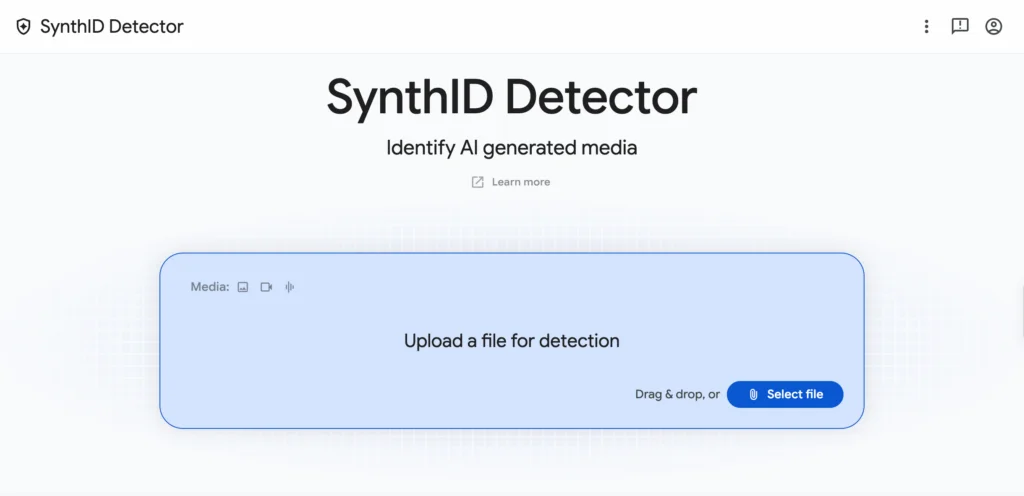
AI-generated media is becoming increasingly convincing, challenging our ability to discern authenticity just by looking. Google's DeepMind has introduced the SynthID AI detector to address this issue, offering a practical solution for educators aiming to instill media literacy in their students.
What Is SynthID?
SynthID functions through a dual-layered approach:
- A watermark is embedded when specific AI tools produce or modify content.
- A detector examines the media later for this watermark.
This watermark is invisible, integrated into the very fabric of the content, such as pixels in images or frames in videos, ensuring that it remains detectable even after typical editing actions like cropping and resizing. Unlike basic file metadata, which can be lost during edits or downloads, SynthID’s signals are designed to persist through common modifications.
Google has also adapted SynthID for AI-generated text through its Gemini model. This text watermarking subtly alters how certain words are selected during content creation. However, as of now, SynthID’s primary focus remains on images, videos, and audio clips rather than being a general essay inspection tool.
Capabilities of the SynthID AI Detector
The SynthID Detector enables users to upload files and verify the presence of the SynthID watermark.
| Media Type | What SynthID Examines |
|---|---|
| Images | Invisible signals embedded in the image pixels |
| Videos | Watermarks integrated within video frames |
| Audio | Inaudible signals implanted in the sound file |
| Text | Watermarking technology exists, but it isn't used for general AI text detection yet |
Initially, the detector is optimized for media produced by Google tools. However, its functionality will expand to include outputs from collaborations with companies like OpenAI and NVIDIA, contingent on the AI tools employing compatible watermarking methods.
For educators utilizing Gemini, there’s an option to upload media files and question whether they were AI-generated or modified. However, this verification is currently limited to one file at a time and has file size restrictions: images must be under 100 MB, videos should not exceed 90 seconds, and audio files must be shorter than one hour.
Leveraging SynthID in the Classroom
Rather than treating SynthID as a mere validation tool, students can engage in investigations that foster critical thinking about media authenticity.
Analyzing AI-Generated Media
Present students with a mix of traditional photos, AI-generated images, and manipulated media. Encourage them to assess the authenticity of each piece before checking SynthID's results.
- Reflect on whether they consider the media genuine, altered, or generated
- Note any visual or auditory cues that influenced their judgment
- Document SynthID’s findings
- Reevaluate original conclusions based on SynthID’s results
- Discuss what further evidence might inform their assessments
This exercise emphasizes the disparity between human intuition and technological validation, highlighting the increasing unreliability of mere appearances.
Investigating Viral Media
When students encounter questionable images or videos online, SynthID can be a step in a more extensive verification process. Combining it with reverse image searches, tracking the original source, and verifying against credible reports will train students to conceptualize a comprehensive verification routine.
Understanding Digital Watermarking
SynthID serves as a gateway for lessons on digital provenance—the recorded origin and history of media. Encourage students to contrast invisible watermarks with visible labels and traditional metadata.
- Who holds the responsibility for labeling AI-generated content?
- Should every AI tool implement a compatible watermark?
- What implications arise when metadata is stripped?
- How might someone manipulate files to circumvent detection?
- Can the mere fact of AI involvement indicate trustworthiness?
This discourse intertwines technological literacy with discussions on ethics, responsibility, and digital citizenship.
Defining "Authentic"
Students should explore how a genuine photograph can be misleading if miscaptioned, while an AI-generated image may be valid when correctly labeled. SynthID could differentiate between "Was AI involved?" and "Can we trust this content?" to refine their understanding of authenticity.
How to Use SynthID
Utilizing SynthID is straightforward:
- Access the SynthID Detector.
- Sign in if prompted.
- Upload your media file.
- Allow the detector to search for a watermark.
- Review the findings, specifically noting where the watermark was detected.
- Combine these insights with additional verification tactics.
Limitations of SynthID
It's essential to understand that SynthID doesn't function as an all-encompassing AI detector. A positive detection of a watermark can indicate that compatible AI tools were involved, but an absence of a watermark shouldn't be misinterpreted as proof of authenticity. Content might still have been produced using unsupported AI methods.
Heavy alterations to media can complicate detection; subtle edits or simple designs might lack detailed signals. Google emphasizes that SynthID should be part of a broader approach to identifying AI-generated media, rather than a standalone solution.
This nuance is particularly relevant in educational settings. SynthID's results should not be the sole basis for making accusations against students; it's primarily a teaching tool aimed at fostering skills in verification and media literacy.
Final Thoughts
SynthID equips educators with a valuable resource for introducing students to digital watermarking and AI media verification. The emphasis should be on meaningful discussions about evidence, authenticity, and trustworthiness rather than relying solely on technology for conclusions.
It’s advisable to complement SynthID with reverse image searches and detailed media analysis. Students need to grasp both the strengths and limitations inherent to verification technologies, cultivating critical judgment that extends beyond algorithmic outputs.
The post SynthID AI Detector: A Practical Guide for Teachers appeared first on Educators Technology.
Discussion
Sign in to join the discussion.